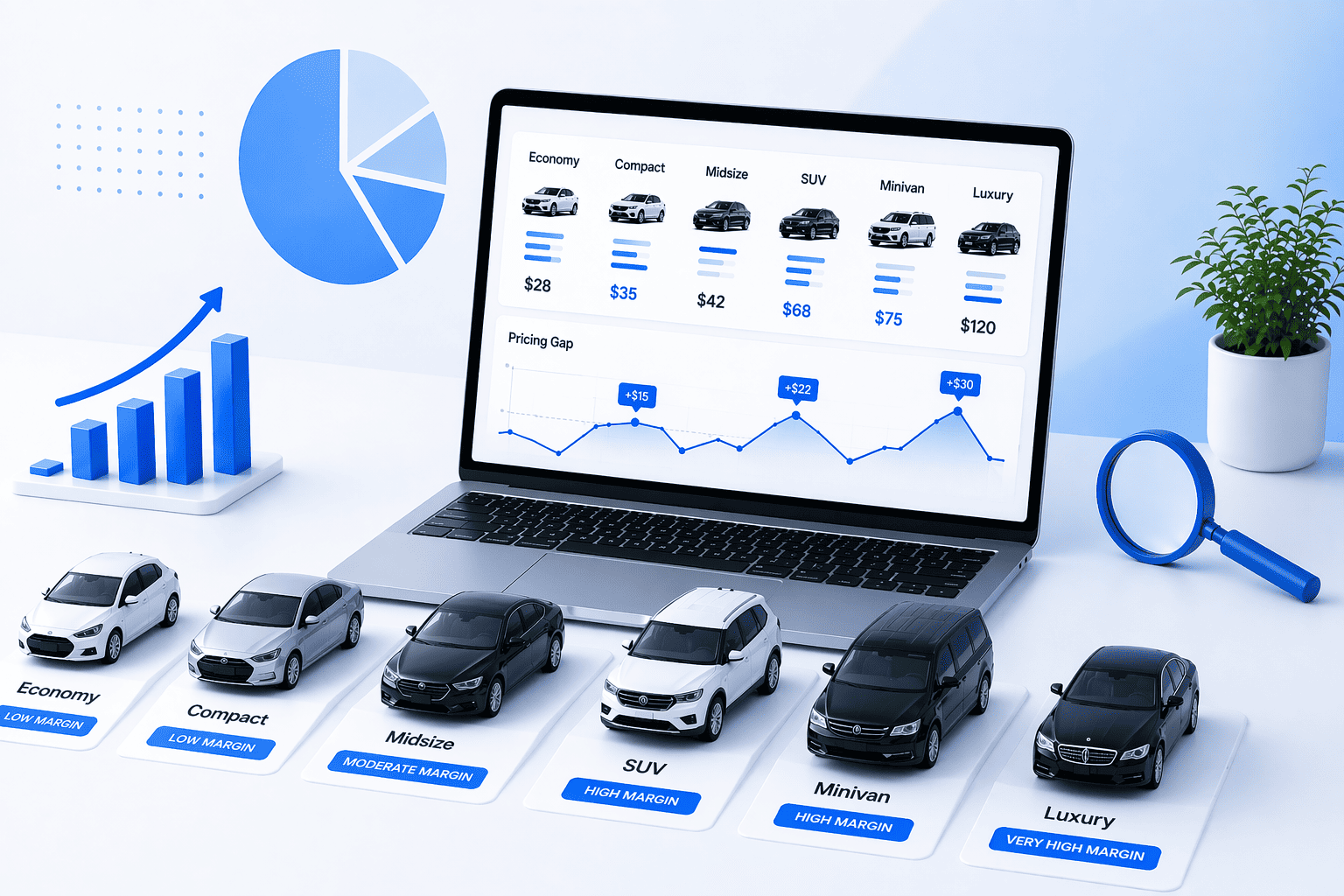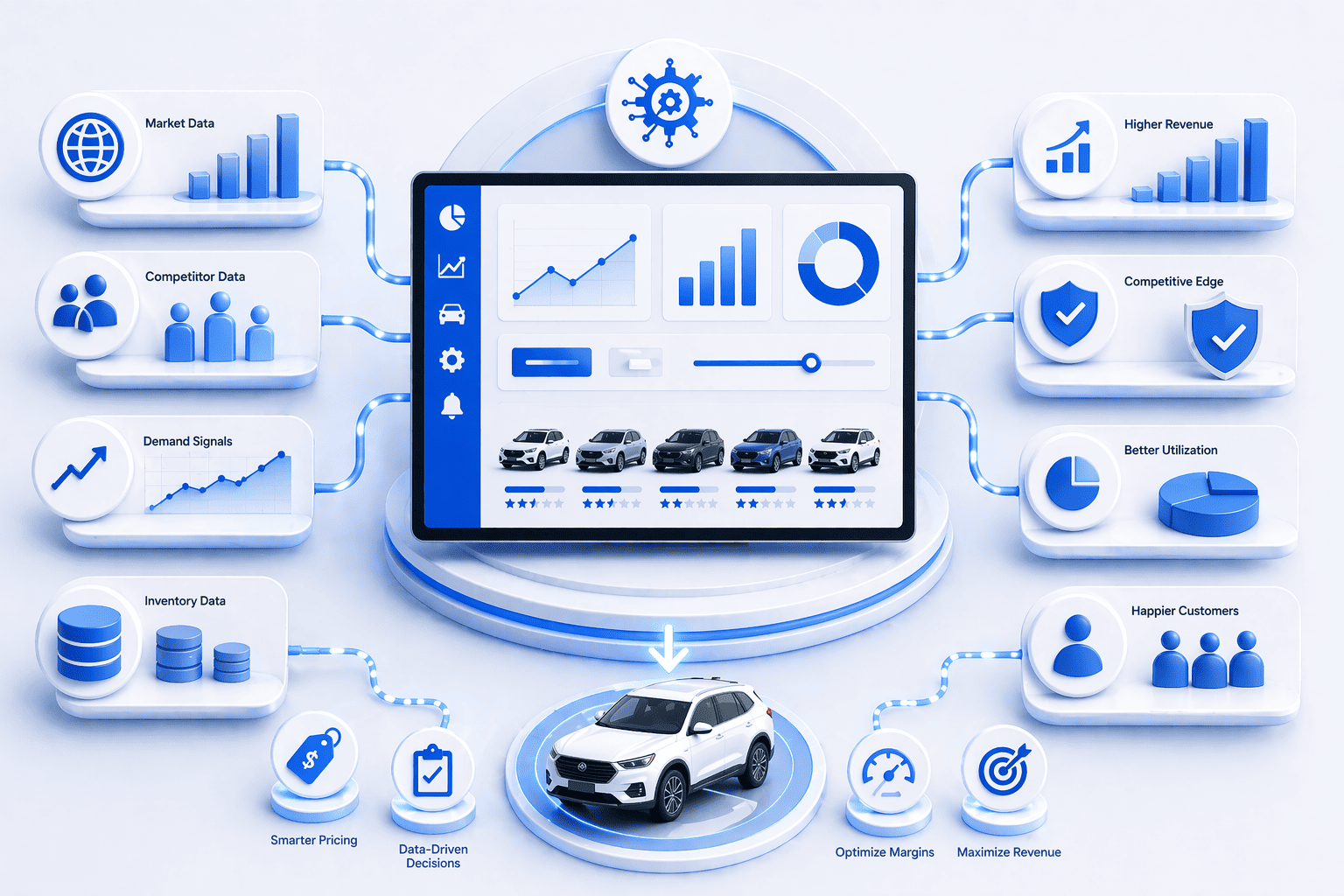
The Pricing Gap You Don't Know About
Here's a number that should alarm you: 43% of independent rental operators admit they check competitor rates less than once per week. Meanwhile, the major chains Hertz, Enterprise, Avis are adjusting prices multiple times a day based on demand signals, weather, events, and availability.
That gap is not a minor inconvenience. It's the difference between winning and losing reservations at a scale that compounds every single month.
This article walks through why daily rate tracking matters, what it actually looks like in practice, and how AutoRentalRate makes it effortless enough that you'll wonder how you managed without it.
Why Rates Move More Than You Think
Car rental pricing is not stable. It's not like a hotel rack rate that sits for weeks. Competitor rates in active markets can shift:
- 3-7 times per day at major airports during peak demand
- Every 15-30 minutes when inventory is running low
- Overnight when a competitor loads a weekend promotion
If your last price check was Tuesday morning and it's now Thursday afternoon, you're flying blind. You might be $18 cheaper than you need to be, leaving margin on every single booking. Or you might be $22 above the market after a competitor dropped prices, which is silently killing your conversion rate.
Neither scenario is visible to you without daily ideally real-time tracking.
The Three Pricing Scenarios That Cost Operators the Most
1. The Invisible Undercutter
A regional competitor drops their economy rate from $34/day to $26/day for a two-week stretch to clear inventory. You're sitting at $31. You're not the cheapest anymore, but you don't know it. Your booking rate dips. You assume it's seasonal.
It wasn't seasonal. It was $5.
2. The Missed Surge Window
There's a conference in town. Three competitors run out of compact cars on Wednesday. Demand spikes. The smart operators pushed their rates up 30% and captured high-willingness-to-pay customers. You were still at your standard Thursday rate because you didn't see the gap open.
You left real money on the table not because you lacked demand, but because you lacked information.
3. The Race to the Bottom You Started
You manually check rates once a week. You see a competitor is $4 cheaper. You drop your price. The competitor's system sees your drop and responds. Their price falls. Another operator follows. Within 72 hours, three operators have compressed the market for no demand-side reason just algorithmic reaction to a manual price cut nobody needed to make.
Daily visibility with proper context (not just raw numbers, but trend direction) lets you avoid being the one who starts this chain.
What Daily Rate Tracking Actually Looks Like
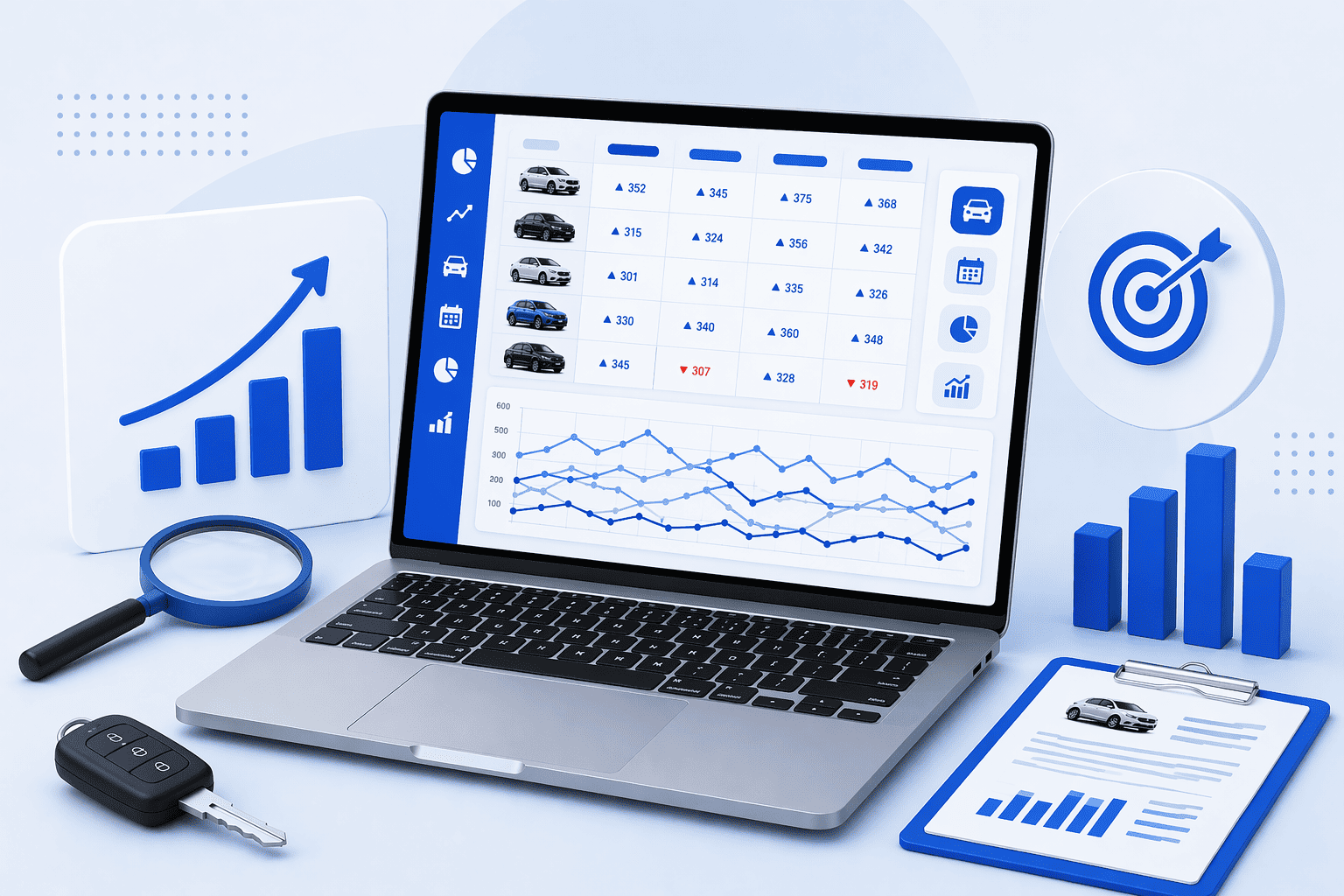
With AutoRentalRate, the morning view shows you:
1. Your position vs. top 5 competitors for each vehicle category you operate, ranked lowest to highest price
2. Yesterday vs. today a directional arrow showing if each competitor moved up, down, or held
3. 7-day trend so you can see if a competitor is in a promotional window or a sustained reprice
4. Availability pressure whether competitors are low on stock in a category (a leading indicator for imminent price rises)
This takes about 4 minutes to review. You're not drowning in data. You're getting the signal, cleanly.
The Compounding Advantage
Here's the part that's easy to underestimate: the value of daily tracking compounds.
After 30 days, you start to see patterns. Competitor A always drops rates on Sunday evenings for the following weekend. Competitor B holds price on SUVs even when demand is soft, then runs a flash sale. Competitor C is extremely responsive to your price moves which tells you they're watching you too.
After 90 days, you have a reliable model of your competitive landscape. You can stop reacting and start anticipating.
After a year, you have historical data that lets you forecast competitor behaviour before events, before holidays, before the demand patterns your market has shown you over and over again.
None of this is possible if you're checking manually once a week.
Getting Started
AutoRentalRate connects to your existing workflow in under 10 minutes. You tell us which locations and vehicle categories matter to you, which competitors you want to track, and what your baseline rates are. The system does the rest.
The dashboard is waiting for you tomorrow morning. The question is whether you'll have yesterday's data or this morning's.
That gap is worth more than most operators realise.