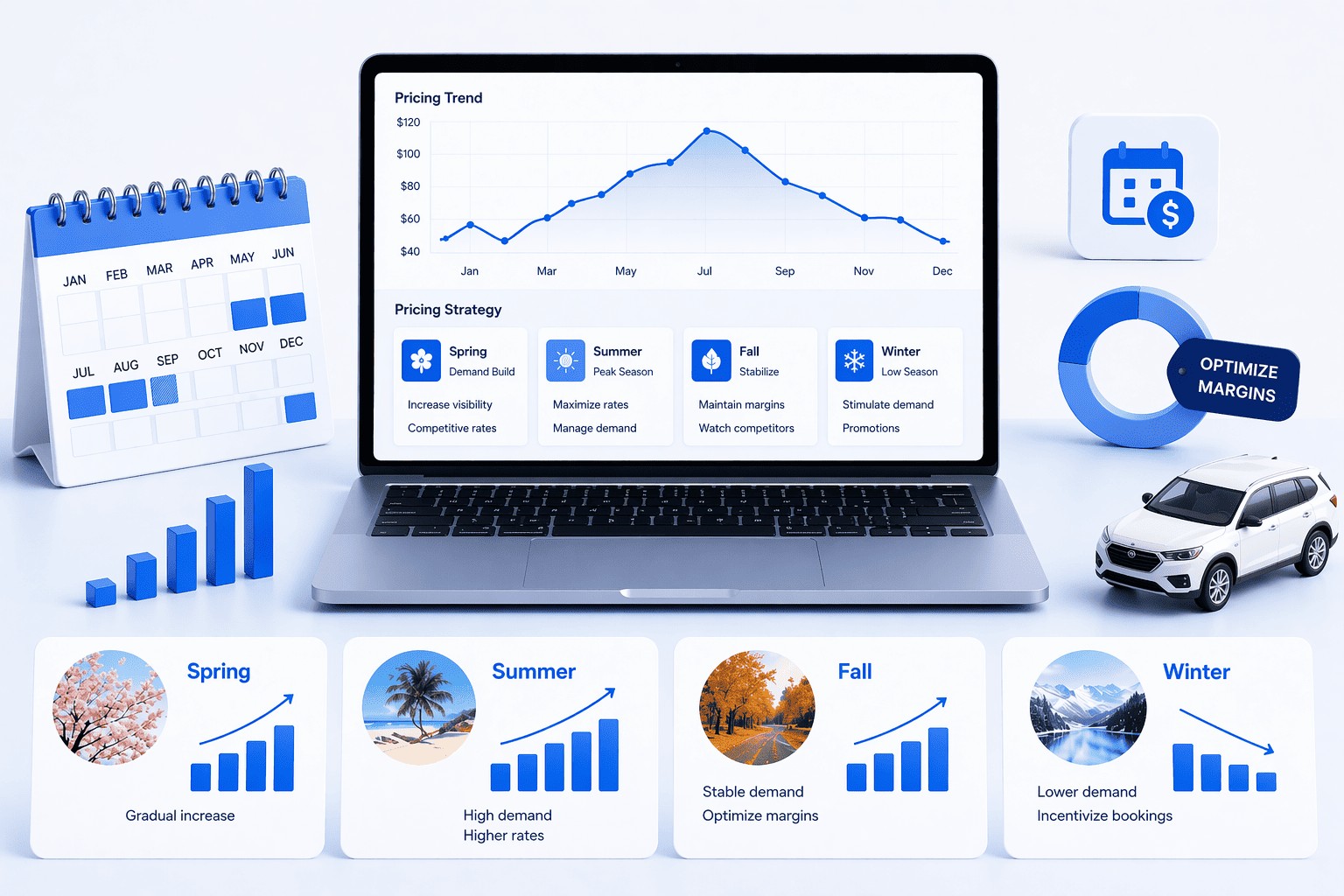
Why Seasonal Pricing Matters
Seasonal pricing is not simply about increasing rates during summer and lowering them during slower months. It is about understanding how customer demand shifts throughout the year and preparing your pricing strategy before those changes happen. The best operators do not wait for demand to rise before adjusting prices. They prepare in advance.
Many rental businesses react too late. They notice bookings increasing only after the strongest pricing window has already passed. Others keep the same pricing structure all year, which leads to lost revenue during peak periods and poor occupancy during slower seasons.
A strong seasonal pricing strategy helps operators stay ahead of demand instead of constantly reacting to it.
Every Market Has Its Own Seasons
Not every rental market follows the same seasonal pattern. Airport locations may see stronger weekday business travel and heavy tourism demand during holidays. Coastal destinations often experience major summer demand spikes, while city-center branches may depend more on conferences, corporate travel, and insurance replacement rentals.
Even two branches in the same city can behave very differently depending on customer type and location.
This is why using a simple “summer high, winter low” pricing strategy is not enough. Operators need to understand their own market first. Looking at past booking history, competitor movement, and local event calendars helps create a seasonal strategy based on real customer behavior instead of assumptions.
High Season Is More Than Summer
Many operators think high season only means summer travel, but profitable demand spikes happen all year. School holidays, long weekends, public holidays, major sports events, wedding seasons, business conferences, festivals, and even airport disruption periods can all create short-term demand surges.
These shorter windows often create stronger pricing opportunities than an entire month of regular summer demand.
Operators who track these patterns can raise rates with confidence because demand is supported by real market behavior. Operators who miss them often sell out too early at lower prices and leave revenue behind.
Low Season Requires Strategy Too
Slow periods are where many rental businesses make emotional pricing decisions. Bookings slow down, pressure increases, and prices are often reduced too aggressively without a real plan.
Lowering rates too early can create unnecessary damage. Sometimes demand is weak, but sometimes customers are simply booking later than usual. Cutting prices too fast trains customers to wait and weakens long-term pricing power.
Low season strategy should focus on controlled positioning. Operators should ask whether competitors are also discounting, whether demand is delayed or truly soft, and whether value-added offers could work better than direct price cuts. Protecting rate integrity matters just as much as winning bookings.
Build Different Rules for Different Categories
Not every vehicle category should follow the same seasonal pricing strategy. Economy and compact vehicles are highly price-sensitive, where even small changes can impact conversion quickly. SUVs often perform best during family travel periods, road trip seasons, and school holidays.
Minivans become especially valuable during peak family travel months and often support much stronger pricing than expected. Luxury and specialty vehicles may depend more on weddings, corporate events, and premium leisure demand.
Applying one seasonal rule across every category creates missed opportunities. Each vehicle class should have its own pricing logic because that is where real margin improvement happens.
Competitor Trends Tell You When to Move
Your own booking volume matters, but competitor movement often gives the earliest warning signs. If competitors begin raising SUV prices two weeks before a holiday weekend, that tells you demand is building. If airport compact pricing suddenly softens during a strong business travel period, that is also valuable information.
Watching competitor trends helps operators move before demand becomes obvious to everyone else.
This is one of the biggest advantages of daily rate tracking. Instead of reacting late, operators can price proactively and protect stronger margins throughout the year.
Set Seasonal Reviews in Advance
Many operators review pricing only when something feels wrong. This creates reactive management and rushed decisions.
A better approach is scheduled seasonal reviews before summer travel, winter holidays, school breaks, major local events, and important business travel periods. Planning ahead improves decision-making and removes guesswork.
Instead of asking, “Should we change rates today?” operators start asking, “What should our pricing strategy be for the next six weeks?” That creates far more control and consistency.
The Role of Historical Data
Historical data gives pricing confidence. Operators can review what happened during the same holiday period last year, how competitors behaved, and which vehicle categories delivered the strongest returns.
Without historical data, every pricing decision feels like a guess. With it, pricing becomes more predictable.
AutoRentalRate helps operators compare current competitor activity with previous seasonal behavior so pricing decisions become faster, more accurate, and easier to justify. This turns experience into a repeatable pricing system.
Seasonal Pricing Is a Competitive Advantage
The best rental operators do not simply react to busy periods. They prepare for them in advance. They know when demand will rise, which vehicle categories will move first, and where competitors usually make mistakes.
That preparation creates better pricing, stronger occupancy, and healthier margins across the entire year.
Seasonal pricing is not about charging more. It is about charging correctly. The operators who do that consistently are the ones who build long-term competitive advantage.